In Pakistan, a woman is rarely allowed to exist as an individual.
Instead, she is introduced, understood, and ultimately respected only through her relationship to men: someone’s mother, someone’s daughter, someone’s sister. Identity is not inherent, it is assigned. Respect is not earned—it is conditional.
This is not accidental. It is structural.
Pakistani society operates on an unspoken hierarchy of “respectable women.” At the top stands the mother, followed by the daughter, and finally the sister. These categories are not merely descriptive—they are controlling frameworks.
A mother, in the cultural imagination, is revered. But this reverence comes at a cost. She is expected to sacrifice her ambitions, her desires, and often her autonomy for her husband, children, and extended family. Her value is tied to service. Her dignity is rooted in self-erasure.
She is celebrated not for who she is—but for what she gives up.
The daughter occupies the next tier. She is expected to excel—academically, socially, morally—until she is deemed suitable for marriage. At that point, her trajectory is no longer hers to decide. Acceptance, not agency, becomes her defining trait.
Then comes the sister—whose role is perhaps the most fluid, and therefore the most vulnerable. Her identity is often tied to the honor of her brother, her behavior monitored and adjusted accordingly. In many cases, her rights are negotiated against his privileges.
Identity by Association
After fulfilling these roles, a woman’s identity is complete—at least in the eyes of society. She becomes “kisi ki maa, behen, ya beti.”
But what happens when she steps outside these expectations?
A slipping dupatta, a fitted outfit, a moment of joy expressed through dance—these are enough to strip her of the very titles once used to protect her. The same phrase that grants dignity can be weaponized to shame:
“Dekho, yeh bhi kisi ki maa, behen, beti hai.”
Respect, then, is not unconditional. It is fragile, performative, and easily revoked.
This mindset is not limited to the uneducated or the underprivileged. It is deeply embedded across all layers of society.
Consider Fatima Jinnah—a central figure in the creation of Pakistan. She stood alongside her brother, contributed to the political struggle, and helped shape the foundation of a nation.
Yet, in collective memory, she is most commonly remembered by a title that fits within the acceptable framework: Madar-e-Millat—Mother of the Nation.
She was not a mother in the literal sense. But culturally, there seemed to be no other way to grant her respect without placing her within a familiar relational role.
The Language of Sympathy
This conditioning becomes most visible in moments of violence.
When a woman is harmed, harassed, or killed, the first response is rarely centered on her as an individual. Instead, it is framed through the men in her life:
“Wo bhi kisi ki maa, behen, beti hogi.”
The appeal is not to her humanity—but to her associations.
It is as if her suffering only becomes meaningful when it is reframed as someone else’s loss.
The issue is not that these roles exist. Being a mother, daughter, or sister is not inherently limiting. The issue is that these roles are treated as the only acceptable forms of identity.
A woman is a complete individual—thinking, choosing, existing—independent of the men around her. Yet, society continues to struggle with granting her dignity without attaching her to a male counterpart.
This is not just a denial of rights.
It is a denial of existence.
About The Author
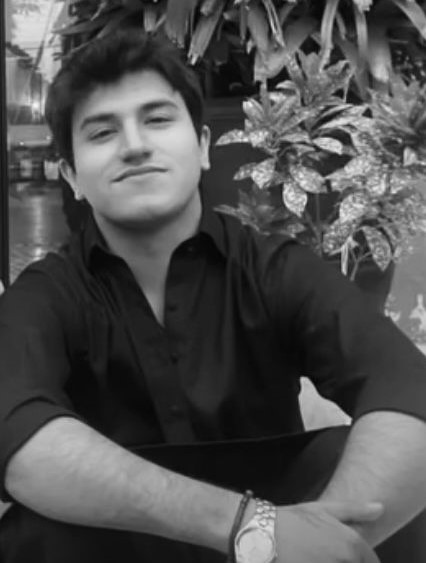
“ Mustafa Imran Mehdi”
A passionate writer and student at University of London. Based in Lahore, and originally from Rahim Yar Khan.
More About Author: Mehdimustafa.com
Follow Here: instagram.com/mehdimustafa16